
 Have any questions? Call us:



A pedestrian struck during roadworks near Ayr has been awarded substantial damages after the District Court accepted that a fractured fibula left him with future employment disadvantage due to ongoing work vulnerability due to leg weakness and intermittent pain.
Liability for the March 2022 collision had already been admitted. The central issue was whether the lasting symptoms described by Alistair Kerr Lawson were caused by the accident and, if so, what financial consequences they carried.
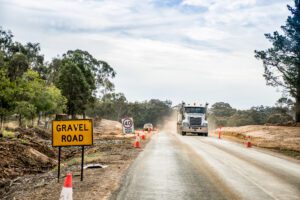
Lawson was 32 and working as a civil-construction supervisor when he was hit in March 2022.
He was on roadworks on the western side of Home Hill Road, Ayr, when a vehicle travelling north left the roadway, collided with three parked vehicles and struck him.
Hospital imaging later that afternoon showed a closed fracture to the upper third of his left fibula, without significant displacement.
He also reported bruising and a shoulder injury, but the shoulder recovered quickly and was not part of the damages claim.
The medical evidence was sharply focused on what remained after the fracture united.
Dr Bruce Low initially found no conventional orthopaedic impairment but assessed 3% whole-person impairment for chronic pain. When he examined Lawson again in March 2025, he recorded a two-centimetre difference between the thighs, with the left quadriceps smaller. Dr Low linked the weakness to pain, giving way and a limp after prolonged walking or work on uneven ground.
His orthopaedic colleague John Tuffley, retained by the insurer, reported normal limb function and an excellent prognosis after examining Lawson in October 2023.
Tuffley considered the pain minor, assessed no permanent impairment and could not readily explain quadriceps wasting that appeared later. Yet he accepted in cross-examination at the Townsville trial, that a two-centimetre difference could be consistent with limping and reduced strength.
Judge Christopher Kahler preferred Dr Low’s conclusion, alongside Lawson’s own evidence and that of his partner, physiotherapist and work colleagues.
He accepted that Lawson experienced pain at the fracture site and knee, fatigue, occasional giving way and a limp after extended walking. The judge also found there was no other identified cause for the knee pain, limp or muscle wasting.
Despite the injury, the evidence showed consistent post-accident employment in civil construction.
Two managers described him as a competent, reliable and well-regarded supervisor.
His employer had though accommodated him by allowing him to drive along parts of the construction site and allocating another worker to some standing and walking tasks.
The court agreed that his ongoing restrictions would favour more sedentary roles and leave him with some labour-market disadvantage.
General damages were set at $6,520, using an Injury Scale Value of 4 for the uncomplicated fibula fracture. The court declined a 30% uplift sought by Lawson because the regulation’s range adequately reflected the injury and its residual impact.
The past economic-loss award was $12,274.20. It comprised $3,307.50 for missed overtime in the eight weeks after the accident, after a discount for public holidays and the uncertain availability of overtime, and $8,966.70 for lower income while Lawson worked in a different role. The latter award was discounted by 10% because the change of employment also reflected family, travel and career considerations.
Lawson claimed $403,447 for loss of future earning capacity or alternatively, a global claim of $400,000.
The judge approached this part of the claim differently. Assuming an approximate $500 weekly earning-capacity loss to retirement age and applying a 70% discount for contingencies a sum of $125,000 was arrived at for future economic loss.
Factors taken into account included Lawson’s strong work record, capacity to progress, the minimal impairment assessments and the likelihood that any gap after his fixed-term project ended would not itself be caused by the injury.
The final judgment of $174,000 illustrates how a comparatively modest permanent impairment can still support a significant global award for future economic loss where the evidence establishes an ongoing work vulnerability – but only after substantial allowance for the uncertainties of working life.
Lawson v Munns & Insurance Commission of Western Australia – [2026] QDC 52 Kahler DCJ, 6 May 2026
Categories: Construction accident