
 Have any questions? Call us:



David Ward was riding in the front passenger seat of a Driftrunner – a specialised mining vehicle used underground – en route to repair a pump at the end of a cut-through.
His driver, Adam Carroll, attempted to pass a machine on the side of the passage as he turned the into the cut-through. The space was tight. Ward’s left elbow came into contact with the machine’s outer flange and was severely injured.
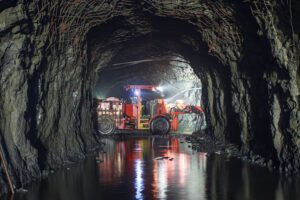
Ward, then 47, was a mechanical tradesperson at employed at the Appin near Woolongong and employed by Illawarra Coal who operated the mine. Caroll was a labour-hire worker, employed by WorkPac and a hired-in worker for Illawarra.
Ward claimed the vehicle came too close and made contact with the stationery machine – a ‘salter’ used to spread salt and chemical drying agents across the mine floor – trapping his elbow.
Carroll accepted that the elbow struck it but contended that Ward’s arm must have been protruding from the cabin and that the vehicle did not hit the equipment while moving.
The consequences of the injury were profound. Ward’s elbow was shattered and degloved. He underwent a 15-hour reconstructive operation, has a fused elbow, ongoing pain, permanent loss of much left-arm function and PTSD with mood difficulties.
The inevitable injury compensation claim came before Justice Richard Cavanagh in the NSW Supreme Court in Sydney.
He considered both men to be generally credible but noted that each had an imperfect recollection of the traumatic event.
Turning to contemporaneous records, site observations and expert evidence the court concluded that, as the vehicle travelled forward, it came sufficiently close to the salter for there to be contact with the vehicle while part of Ward’s elbow was outside the line of the cabin.
That finding mattered because it showed that the vehicle had been driven too close to the obstruction. Having seen the salter, the driver ought to have stopped to inspect the cut-through, approached more slowly, or declined to drive through until satisfied that it was safe.
The judge thus concluded Carroll had failed to take reasonable care.
The more difficult issue was which company bore legal responsibility, Illawarra as mine operator or WorkPac as Carroll’s employer.
The evidence showed that Illawarra controlled the site-specific training, the safety systems, the directions about how Driftrunners were to be driven and the particular work being performed.
The judge noted that Illawarra had a non-delegable duty to take reasonable care for Ward’s safety. In plain terms, that duty required it to ensure reasonable care was taken when he was being transported underground; it was not enough that the mine operator had selected or trained another person to conduct the driving.
WorkPac’s role was principally to recruit, supply and administer its employees. Once Carroll was at the mine, Illawarra had effective control over how he did the work.
Justice Cavanagh ruled Carroll to be Illawarra’s employee pro hac vice – for the relevant purpose and occasion.
Thus it was Illawarra – not WorkPac – who was held vicariously liable for Carroll’s negligent driving. The claim against WorkPac and Illawarra’s cross-claim against WorkPac were dismissed.
The defendants’ argued that Ward had contributed to his own injuries for allowing some part of his elbow to protrude.
Not so, said the judge.
In the absence of evidence of how far his elbow protruded or how it came to be in that position having regard to the vehicle’s movement and the slope of the cut-through, Ward had not been proved to have failed to take reasonable care as opposed to having been merely inadvertent or misjudged his position.
Ward could no longer do mine or other manual work but the court found that he retained a future capacity for some part-time sedentary or administrative work.
The damages award included $299,747 for non-economic loss, $652,500 for past loss of earning capacity, $1,315,800 for future loss of earning capacity, medical and other expenses, care and loss of superannuation benefits.
The total judgment against Illawarra was $3.6 million.
Ward v Endeavour Coal Pty Limited [2026] NSWSC 557 Cavanagh J, 22 May 2026
Categories: Mining Injury